- Teacher: Komie Dosu
Final year students in the school of humanities and education enroll in this course. In-service Primary and Secondary School Teachers also take this course. Research is an important endeavor in contemporary organisations where systematic process is followed to investigate problems aimed at creating new knowledge, solutions to problems and informing new ways of addressing emerging issues. Therefore, students must be keen to learn and explore theories of research and be able to translate them into research proposals, field work, data analysis, discussions and recommendations.
Whether one works in the education or other sectors, research knowledge, skills and the ability to write good research reports underpinned the strength and best practices of modern organisations. To become an expert in your field of study and to become a good researcher, demands more time, more training and more experience than teachers and/or other professionals are able to accumulate.
- Teacher: James Neo
This course aims to introduce students to the origins, concepts, theories, perspectives, and dynamics of the guiding visions that have evolved as an integral part of the discourse of peace and conflict resolution studies. This will also provide students with a common language and precision in their understanding and skills for examining the dimensions, obstacles, and opportunities in peace, and to equip them with critical thinking on conflict resolution and provide appropriate examples and references for future explorations. The course will enable students to develop their understanding of key concepts and issues in contemporary conflict prevention and peacebuilding. The unit will demonstrate the interdisciplinary character of peace and conflict studies and the application of theories and methods across the spectrum of conflict types, from interpersonal, armed, to community and international conflicts.
- Teacher: Larry NOM
- Teacher: Komie Dosu

Students will critically analyze how communication processes influence social, economic, and political development outcomes, particularly in rural and marginalized communities. The course also highlights the importance of inclusive communication in addressing issues such as poverty, gender inequality, health, education, environmental sustainability, and governance.
- Teacher: Sharon Fezamo

Code: HPD101
Credit points: 15
Pre-requisites: Nil
Core/Elective: Core
Contact Hours: Three (3) contact hours per week for 14 weeks
Course Coordinator(s): Mr. Nom & Mr. Dosu
Description
This course comprised of introduction to planning and introduction to development that were taught separately. These two courses are being merged to give the name Introduction to planning and development and is delivered in two modular approaches. This course introduces students commencing their planning studies to the principles which underlie planning as both a discipline and practice, and provide a foundation to the methods and frameworks planners use to achieve their objectives and goals. The course explores the role of different organisations and stakeholders involved in the planning process, and the crucial interplay between planning and development. The course also gives an overview of the origin (history), evolution and strengths and weaknesses of the planning system; operation of the current planning and development system including evaluation of planning documentation.
Furthermore, what is development and why does it matter? This course will also explore this question and by examining the origins of development and its history as an idea, goal and practice, the conceptual and theoretical aspects underpinning development studies as a discipline, debates about development in theory and practice as well as the role of these theories and debates in shaping the contemporary world. Equally important is the interplay between theory and practice and the outcome of this relationship. The aim is to assist students to gain a solid understanding of the realities of development through engaging with development theories and to become familiar with some of the current practices in development that are effective, appropriate and sustainable. Students will learn why development thinking and practices has changed over time and the extent to which its architects have learnt from past failure and successes of development and what might be better approaches to make a better community.
Learning outcomes
Towards the end of this course, students should:
• Critically analyse variety of approaches that have driven and characterised planning and development activity over time.
• Understand the planning process and the purpose of planning.
• Develop an advanced understanding of various purposes and modes of planning.
• Develop awareness of the complex networks of social, cultural, economic, political and environmental considerations related to planning.
• Analyse a planning problem and its solution and relate this to planning theory.
• Critically analyse the role of planning in modern economies and societies.
• Critically evaluate the role of the modern planning professional and challenges entailed.
• Explain and appreciate the importance of ethics in planning practice.
• Develop confidence in dealing with enquiries/questions about planning applications and planning issues in general.
• Become conversant with the theoretical and practical dimensions of development.
• Understand the historical and demonstrate critical understanding of sociological and political theories of development
• Develop capacity to make an independent analysis and assessment of the assumptions, logic, and modalities, including views of agency, of different development ideas and models, and their applications.
• Be able to distinguish and assess analytical, prescriptive and empirical claims, and how effectively/ plausibly they are combined and deployed in different models of development theory, policy and practice
• Be able to handle complex ideas and express in their own view of them in a clear and well-structured manner.
Students who fully participated in auditing of this course should be able to;
1. Be conversant with and understand the theoretical and practical dimensions of development
2. Develop intellectual capacity to assess and analyse developmental issues
3. Distinguish and assess analytical, prescriptive and empirical claims, and how effectively/ plausibly they are combined and deployed in different models of development theory, policy and practice
4. Be able to manage complex ideas and expresses their own well-structured and clear views
5. Analyse and provide recommendation and or proposition for logical solution to issues
6. Gain a solid understanding of the realities of development through engaging with development theories.
Content – Module 1
Unit 1. Introduction to planning - definition, objectives, focus, purposes, principles and functions of planning,
Unit 2. The history of planning,
Unit 3. Types of planning,
Unit 4. Planning process and cycle,
Unit 5. Planning as a profession and a tool for decision making,
Unity 6. Premising and Forecasting in planning,
Unit 7. Emerging issues and challenges of planning,
Unit 8: Limitation/demerits of planning
Content – Module 2
Unit 10. Introduction (What is development? And why development studies?)
Unit 11. Theories of development (modernization, dependency, structuralism, basic needs, neo-liberalist,)
Unit 12. Recent trends in development theory (post development theory, sustainable development, human development theory)
Unit 13. Development and ethics.
Teaching and learning strategies
Weekly lectures followed by tutorials which explore issues raised in the lectures. These will be based on defined readings and exercises relevant to the lecture themes.
Assessment:
Assessment methods vary, but are all within the boundaries of the University’s assessment policy. Different assessment methods will be used to assess students in this course. These methods include a combination of written tests and assignments, presentations, essays, reflective journals, portfolio, end-of-semester examination, individual and group projects, research reports, practical and field visit reports, short quiz, attendance, role plays, diagnostic tests, folio, etc., as deemed appropriate.
The assessment component for this course is as follows:
1. Final end of semester written exam = 40%
2. Continuous assessment = 60%
Continuous assessment include: [written tests = 20%, reflective journal = 10%, assignment = 20%, project = 10%]
Task 1: Test
Description: Multiple choice and short answer test. This test is to assess students’ comprehension and understanding of the themes and issues presented/discussed in the first 4 weeks of this course.
Criteria: Students will be assessed on the learning outcomes stated above in this course.
Due date: Week 4
Length: 1 hour
Weighting: 20%
Task 2: Assignment- Individual Essay
Description: Assignment on topics within the course contents either through submission of a case study requiring documentary research, group analysis and solution/s.
Criteria: The essay will be marked based on format of the essay, in terms of language, structure, comprehensiveness of contents, organization of materials, logic and structure, readability, formatting, and novelty of presentation.
Due Date: End of Week 8
Length: 4 – 6 pages
Weighting: 20%
Task 3: Reflective Journal
Description: Reflective journals on topics within the course content either through submission of a case study requiring documentary research, group analysis and solution/s.
Criteria: A detailed description and high-quality written response of what has been taught during each lecture.
Due Date: Every one week- Week 1- 5
Length: 1 page each lecture (Total of 5 pages)
Weighting: 10%
Task 4: Written Final Examination
Description: Final examination to synthesis learning throughout the semester
Criteria: Students will be assessed on the unit’s learning outcomes with regards acquiring and understanding the principles of Introduction to Planning & Development Studies.
Due Date: Exam week at the end of Semester
Length: 2 hours
Weighting: 40%
Attendance and other requirements to pass the unit
Students are required to attend 80% of face-to-face teaching sessions; Students are required to complete 100% of laboratory sessions.
Feedback and unit evaluation strategies
Students are encouraged to provide informal feedback to the lecturers during the units. There will be a formal evaluation of the unit, either online or paper-based. Students are advised to make constructive comments either positive or negative about the effectiveness of the teaching and learning strategies used to achieve the learning outcomes and to develop the graduate attributes. Comments made by students will help lecturers to improve their professional performance.
Other information
Consultation times can only be available to the students during a non-contact hours or days in a week.
Key references for the unit
Escobar Arturo (1995) Encountering Development. Princeton University Press.
Li, Tania Murray (2007) The Will to Improve: Governmentality, Development and the Practice of Politics. Duke University Press.
Peet, Richard and Elaine Hartwick (2009) Theories of Development: Contentions, Arguments, Alternatives. 2nd Ed. New York: Guilford.
Haslam. P, Schafer. J & Beaudet. P 2012. Introduction to International Development: Approaches, Actors and Issues (2nd Ed), Oxford University Press.
Escobar Arturo (1995) Encountering Development. Princeton University Press.
Li, Tania Murray (2007) The Will to Improve: Governmentality, Development and the Practice of Politics. Duke University Press.
Peet, Richard and Elaine Hartwick (2009) Theories of Development: Contentions, Arguments, Alternatives. 2nd Ed. New York: Guilford.
- Teacher: Komie Dosu
Code: HID412
Core/Elective: Core
Credit Point: 15
Contact Hours: Three (3) contact hours per week for 14 weeks equivalent
Prerequisite: HID 321 Conflict Resolutions and Peace Building.
Course Coordinator: Mr. Nom
Course Description:
Conflicts over natural resources and the environment are ubiquitous and inevitable. The purpose of this course is to examine the causes, dynamics and consequences of natural resource conflicts, as well as the range of possible approaches to prevent and resolve such conflicts. It focuses on the causes and nature of resource conflicts, their connection with local and global governance, the clash between local claims and national interest in resource politics, the link between international demand and pressures on local communities, the activities of warlords, the involvement of the international community in addressing these conflicts and the impact of globalization on resource conflicts. It further discusses the ramifications of natural resource conflicts in developing societies and to situate these within the nexus of security and development. It will consider the merits of conventional approaches to manage natural resources conflict, and emphasize the theory and methods of collaboration. The course further emphasizes on considering innovations in the theory and practice of natural resources conflict resolution. It draws on the history of natural resource policy and conflict resolution, and facilitates arguments that conventional approaches used in preventing and resolving natural resource and environmental conflicts (legislative, administrative, and judicial) often leave citizens, advocates, and decision makers dissatisfied with the outcome. Case studies of conflicts in relation to natural resource development in PNG will be examined.
Learning Outcomes:
The primary aim of this course is to educate and help students to understand how natural resources can create or aggravate conflict and learn to assess the situation and look for opportunities for interventions that can prevent or reduce conflict. At the end of this course, it is expected that students will be in a position to:
Understand the causes, dynamics, and consequences of natural resource and environmental conflicts.
Explain the concept of conflict and have an understanding of selected theories of conflict: humanist, interactionist and structural theories.
Understand the range of possible approaches to prevent and manage such conflict.
Gather appropriate information and assess the need for public engagement, dialogue, and conflict resolution.
Design public processes that are inclusive, informed, and deliberative.
Adapt these principles to public participation, community-based collaboration, administrative rule making, environmental impact assessment, land use and resource planning, and legislative policymaking.
Participate effectively in multi-party public processes.
Understand the role and value of process managers (facilitators and mediators).
Adapt the principles and strategies to science-intensive public issues; intractable public disputes; regional, trans-boundary issues; and dispute systems design.
Understand the implications of current trends in citizen participation, deliberative democracy, and the governance of natural resources
Content
1. The concepts and theories of conflict,
2. The role of conflict in natural resource use and management,
3. Analysis of conflict,
4. Management of conflict,
5. Resolution of conflict, the role of mediation in conflict,
6. Stakeholder relationships,
7. Conflict between private and public good,
8. Ownership and access rights, community participation,
9. Partnership building, governance, and the
10. Challenges of policy implementation.
Teaching and Learning Strategies:
Lectures will introduce the main topic, with the support of slides/power points synthesizing concepts, paradigms, theories and examples extracted from the readings. This will be followed by tutorials which explore issues, group work, discussions or exercises raised in the lectures. Short documentary video films will be used to aid student learning.
Assessment:
Final written exam (40%), Assignment (20%) written test (20%), critical review (10%) reflective journal (10%).
Task 1: Test
Description: Multiple choice and short answer test. This test is to assess students’ comprehension and understanding of the themes and issues presented/discussed in the first 4 weeks of this course.
Criteria: Students will be assessed on the learning outcomes stated above in this course.
Due date: Week 4
Length: 1 hour
Weighting: 20%
Task 2: Major Assignment (Topics changed often)
Description: Type of Disputes emerges in Resource Development
Criteria: The essay will be marked based on format of the essay, in terms of language, structure, comprehensiveness of contents, organization of materials, logic and structure, readability, formatting, and novelty of presentation.
Due Date: End of Week 8
Length: 4 – 6 pages
Weighting: 20%
Task 3: Critical Review
Description: Critical review on a specific reading (s) or case study within the course content to see whether students can critically analyze resource development issues on local and global scale.
Criteria: Present ideas in an accurately, discuss important points, including evidence of references in support of their critical review.
Due Date: End of week 6
Length: 2-4 pages
Weighting: 10%
Task 3: Reflective Journal
Description: Reflective journals on topics within the course content either through submission of a case study requiring documentary research, group analysis and solution/s.
Criteria: A detailed description and high-quality written response of what has been taught during each lecture.
Due Date: Every one week- Week 1- 5
Length: 1 page each lecture (Total of 5 pages)
Weighting: 10%
Task 4: Written Final Examination
Description: Final examination to synthesis learning throughout the semester
Criteria: Students will be assessed on the unit’s learning outcomes with regards to the understanding of the content of this particular course.
Due Date: Exam week at the end of Semester
Length: 2 hours
Weighting: 40%
Attendance and other requirements to pass the unit
Students are required to attend 80% of face-to-face teaching sessions; Students are required to complete 100% of laboratory sessions.
Feedback and unit evaluation strategies
Students are encouraged to provide informal feedback to the lecturers during the units. There will be a formal evaluation of the unit, either online or paper-based. Students are advised to make constructive comments either positive or negative about the effectiveness of the teaching and learning strategies used to achieve the learning outcomes and to develop the graduate attributes. Comments made by students will help lecturers to improve their professional performance.
Other information
Consultation times can only be available to the students during a non-contact hours or days in a week.
Key references for the unit
Fisher, R., W. Ury, and B. Patton (2011) Getting to Yes. Revised edition. Penguin Books, New York.
Abidi, Syed A.H., ed. (2002). Living beyond conflict: for peace and tolerance. ABETO, Kampala.
Bascow, Lawrence S. & Wheeler, Michael (1984) Environmental dispute resolution. Plenum Press, New York.
Carpenter, Susan L. & Kennedy, W.J.D. (2001) Managing public disputes: a practical guide for government, business, and citizens’ groups. Jossey-Bass, San Francisco.
Castro, A.Peter & Nielsen, Erik (2003) Natural resource conflict management case studies: an analysis of power, participation and protected areas. FAO, Rome
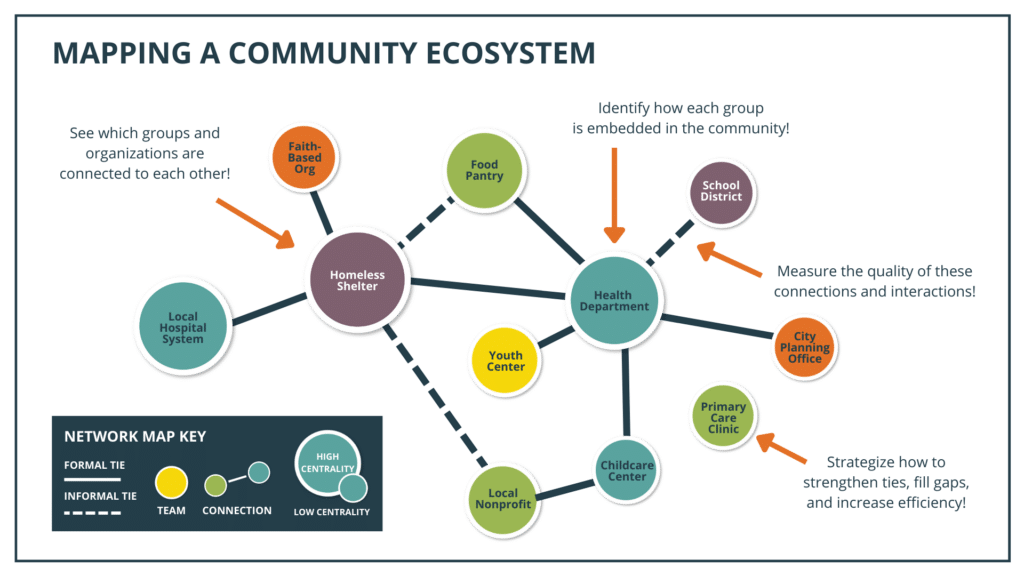
CRM used to identify and record the resources or assets for the purpose of planning. CRM interested in collating information regarding the topography; human settlements; the occurrence, distribution, access to and use of resources in a given locality and the activities of a community from the perspective of community members for the purpose of planning. This unit describes the approach, knowledge and skills required to assess community resources, requirements as well as needs, problems and issues; and to develop strategies to plan and address how these community resources can be efficiently utilized for community development. It describes the skills and knowledge required to work with the community to develop relevant and effective resources to engender community support for community development initiatives.
- Teacher: Sharon Fezamo